.webp)
Why Learn Korean? 8 Reasons to Start in 2026 and Where to Begin in Finland
A few years ago, learning Korean was a niche pursuit. Today it is one of the fastest-growing language choices among young adults in Europe, and Finland is no exception. The reasons people start learning Korean are as varied as the people themselves, but the rewards tend to be the same: deeper cultural understanding, new opportunities, and a community that genuinely welcomes you.
If you have been thinking about learning Korean but are not sure where to start, or whether it is worth it, here is an honest look at why so many people are making that choice right now.
1.The Hallyu Wave Changed Everything
The global rise of Korean popular culture—Hallyu, the Korean Wave—has introduced millions to Korean music, film, television, food, and fashion. K-pop acts like BTS and BLACKPINK have built fanbases across continents; K-dramas are consistently among the most-watched titles on global streaming; Korean cinema has earned international acclaim; Korean food has moved from speciality restaurants onto mainstream supermarket shelves. For many people, that exposure sparks the initial interest.
2.Finnish students are heading to Korea in growing numbers
Exchange programmes to South Korea have become some of the most sought-after options for Finnish university students, with placements at prestigious institutions like Yonsei, Korea University, Seoul National University, and Sungkyunkwan. Students going to Korea may also be eligible for ASEM-DUO scholarships, which support European–Korean academic mobility. For an exchange student, language preparation isn't a nice-to-have—it's the difference between a surface-level semester and a genuinely immersive one. Starting Korean before you go is one of the most practical investments you can make in your exchange year.
3.A new Working Holiday visa is opening up
In May 2026, South Korea and Finland signed a Working Holiday Agreement—a landmark step that will open an entirely new way for young Finns to experience Korea. Under the agreement, Finnish citizens aged 18 to 35 will be able to apply for a working holiday visa allowing them to live, work, and take short-term language courses in South Korea for up to 12 months.
4.Finland is admired in Korea and that opens doors
Finland holds a uniquely respected place in South Korean public life, largely thanks to its global reputation in education. Korean media, educators, and policymakers have paid sustained attention to Finland's approach to teacher autonomy, holistic learning, and student wellbeing. That admiration shows up in real institutional ties: HEI Schools, co-founded with the University of Helsinki, has run a campus on Nami Island since 2021, and in 2024 Busan city officials travelled to Helsinki to study Finnish early childhood education. For a Finn in Korea, this recognition is a social asset—being Finnish is a conversation starter, and pairing it with some Korean is a combination Koreans tend to find both surprising and genuinely appreciated.
5. Travel becomes a different experience
Korea is one of the most rewarding places to travel and one of the hardest to fully experience without some of the language. English gets you through the major tourist areas, but the markets, neighbourhood eateries, temples, and local festivals that make Korea extraordinary often aren't accessible to someone who can't communicate locally. Knowing some Korean changes the kind of traveller you can be: the street-food stalls with no English menu, the monk who'll actually talk to you, the festival that's in no guidebook.
6. Academic and career value
Korea is the world's tenth-largest economy and home to global leaders in technology, manufacturing, and culture. Finnish–Korean trade and academic ties have grown over the past decade, and demand for Finnish professionals with Korean skills—in business, education, translation, and more—is real. Korean proficiency also widens the range of exchange programmes open to you. The TOPIK (Test of Proficiency in Korean) is an internationally recognised qualification, and the Sejong curriculum taught at KSI Tampere builds the foundation you need to sit it—so your learning has measurable value beyond the classroom.
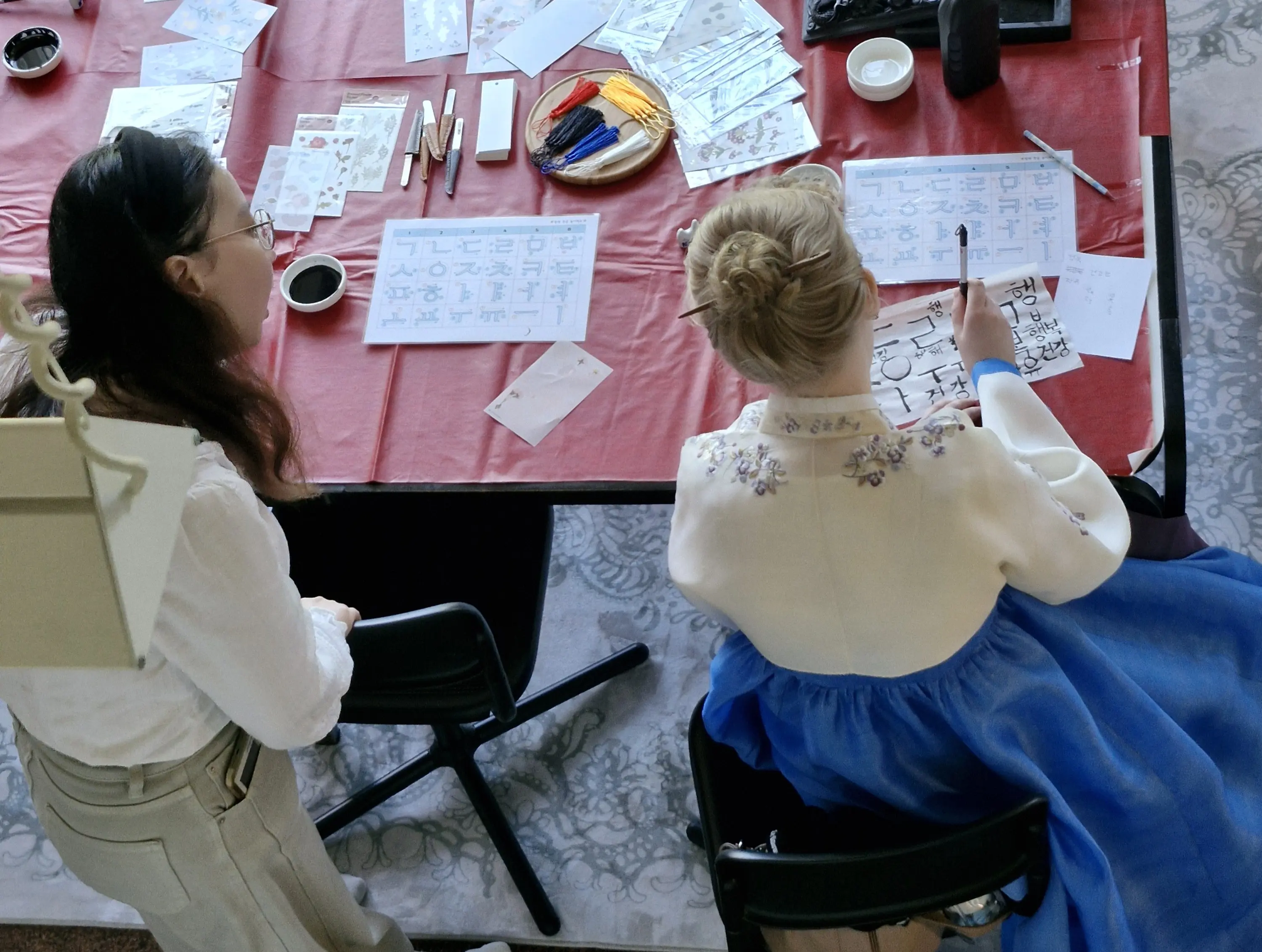
7. Hangul is easier than you think
Korean is a fascinating language to learn, starting with its writing system. Hangul was created in the 15th century specifically to be easy to learn, and most beginners can read it within a few hours of focused study. The grammar—verbs at the end of the sentence—stretches the way English speakers habitually think, which is part of the appeal.
.webp)
8. Community and belonging
Perhaps the most underrated reason: the community Korean connects you to. At KSI Tampere, learning is driven by cultural interest, so the people you study alongside genuinely care about Korea. Throughout the year, Tampere KSI runs cultural events and workshops—Korean tea, calligraphy, hanbok, K-pop, traditional crafts—that give the language a living context.
Where to start: Finland's only official King Sejong Institute
Whether you're preparing for an exchange year, planning a working holiday, or simply drawn to Korean culture, Tampere KSI is the most accessible structured starting point in Tampere—and as Finland's first and only official King Sejong Institute, it offers internationally recognised education with certified teachers, on-site and online options, and a community that makes the journey worth taking.